Two years, three big moves.
Over the past two years (2024Q1 → 2026Q1), the global smartphone story moved off “mature market + stagnant growth” and was rewritten by three things at once: Huawei’s return, Apple’s first annual #1, and generative AI as a real upgrade reason. Total shipments crept from 1.24B (2024) to 1.25B (2025), only +2%, but average selling price (ASP) cleared $400 in a single quarter for the first time, and the premium (>$600) share hit a record ~25%. This page lines up IDC, Canalys and Counterpoint on the same table to see where they agree and where they diverge.
§01 · Overview — two years recap
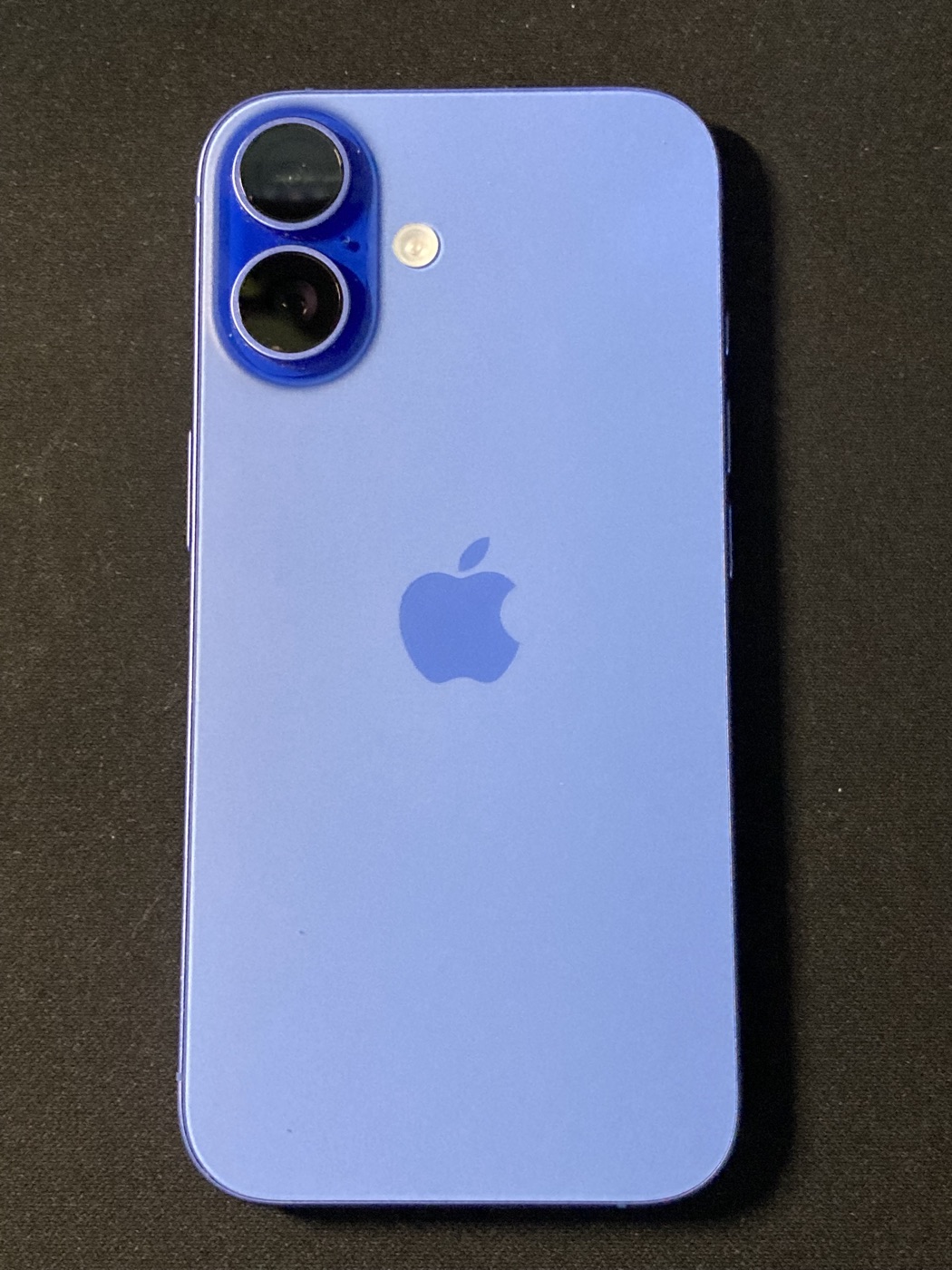
Image: Wikimedia Commons / CC BY-SA 4.0.
Compress the nine quarters from 2024 Q1 to 2026 Q1 into one line: “flat volume + premium-mix uplift + reshuffled silicon competition + fragmented regions”. 2024 global smartphone shipments were 1.240B units (IDC, +6.4% YoY) / 1.222B (Canalys, +7%) — closing the 2022-23 inventory adjustment. But 2025’s increment was just ~2% — on a 1.25B base, every additional unit is a dogfight between three vendors.
The real shift happened at the price layer: per Counterpoint, global ASP rose from $357 in 2024 to $370 in 2025 (+3.6%); Q4 2025 cleared $400 for the first single quarter. Premium share (>$600) lifted from 24% to ~25%, and ultra-premium (>$1,000) within premium reached 40%. The three trackers agree on aggregate volume — IDC 12.4B, Canalys 12.2B, Counterpoint ~12.2B — but diverge sharply on vendor ranking (see §03).
The second shift is silicon: Huawei Kirin returns + TSMC N2 enters mass production + generative AI doubles NPU demand. October 2025 saw Qualcomm Snapdragon 8 Elite Gen 5 / MediaTek Dimensity 9500 / Apple A19 Pro launch in the same window; for the first time in AnTuTu / Geekbench, Snapdragon overtook Apple, and Apple shifted toward efficiency — average power was just 63% of Qualcomm’s.
| Metric | Value | Notes |
|---|---|---|
| 2025 global shipments | 1.25B units · +2% YoY | IDC 12.4B · Canalys 12.22B |
| Global ASP | $370 /unit · +3.6% YoY | Q4 2025 first single quarter past $400 |
| Apple full-year share | 20% · #1 | First annual #1 in 14 years · iPhone shipments 240.6M (+7%) |
| Foldables 2025 | 19.8M units · +3% YoY | Q3 2025 all-time single-quarter high |
Bottom Line · Over two years, handsets shifted from “shipment-driven” to “ASP + mix-driven”.
Look only at volume and this is a +2% industry — irrelevant to beta players. But split volume into “ultra-premium $1,000+” vs ”<$200 entry”, and the past two years’ CAGR is ~+15% vs ~−3%. Winners aren’t shipping more; they’re shipping pricier. Apple’s iPhone ASP runs near $920; Samsung’s A-series ships heavily but profit concentrates in the S-series. What this really means for investors is: share fights over flagship SKUs (iPhone / Galaxy S / Mate / Pura) have replaced total volume as the industry’s primary narrative.
§02 · Shipments — the quarterly pulse
By cadence: 2024 was lifted by “low inventory base + North American carrier restocking”, with Q1–Q4 YoY at +7.8%, +6.5%, +4.0%, +2.4% (IDC). Once the comp got tougher, 2025 went +1.5%, +1.0%, +4%, +2.3% — back to flat. Real growth came from ASP × mix, not unit volume. The chart below puts IDC and Canalys quarterly shipments on the same axis to highlight methodology divergence.
Sources: IDC quarterly press release; Canalys newsroom quarterly reports. The two trackers differ mainly on “sell-in vs sell-through” treatment and how much ODM / low-end long-tail they cover.
Three acts
① 2024 · restocking rebound — Full-year +6.4% (IDC) / +7% (Canalys), the strongest year since 2021. Drivers: North American carrier restocking, China trade-in subsidies, India’s second wave of feature-to-smartphone migration. Q4 2024 hit 331.7M.
② 2025 · high base + slow growth — IDC has 2025 at +1% to ~1.243B units; Canalys at +2% (1.222B); Counterpoint also +2%. The three agree on “approximately flat”.
③ 2026 Q1 · fragmentation — US tariff uncertainty plus China memory-price inflation made Q1 deeply uneven. Apple sold 13.1M in China in Q1 2026 (YoY +42%, Counterpoint), but global growth was only +1%.
Quarterly shipment comparison · last 8-9 quarters
| Quarter | IDC M units | IDC YoY | Canalys M units | Canalys YoY | Key event |
|---|---|---|---|---|---|
| 2024Q1 | 289.4 | +7.8% | 296.2 | +11% | Samsung S24 launches with Galaxy AI |
| 2024Q2 | 285.4 | +6.5% | 288.9 | +12% | China trade-in subsidies kick off |
| 2024Q3 | 316.1 | +4.0% | 310.6 | +5% | iPhone 16 launch + Apple Intelligence |
| 2024Q4 | 331.7 | +2.4% | 329.1 | +3% | Huawei Mate 70 series goes on sale |
| 2025Q1 | 304.9 | +1.5% | 296.9 | +0.2% | Samsung S25 · Snapdragon 8 Elite |
| 2025Q2 | 295.2 | +1.0% | 288.9 | −1% | Samsung Z Fold7 breaks out |
| 2025Q3 | 320.5 | +1.4% | 322.5 | +4% | iPhone 17 beats expectations · Apple China surges |
| 2025Q4 | 339.4 | +2.3% | 335.2 | +2% | Apple 25% single-quarter share — all-time high |
| 2026Q1* | 307 | +0.7% | 299 | +0.7% | Tariffs + memory inflation · Huawei China 13.9M |
* 2026Q1 is preliminary; IDC / Canalys formal press-release figures will differ slightly. Historical figures are taken from each tracker’s official press releases.
ASP and price structure
Counterpoint: 2023 $335 → 2024 $357 → 2025 $370. Q4 2025 single-quarter first cleared $400 to ~$402. 2029 expectation $412.
Counterpoint: premium (>$600) rose from 24% to ~25%; ultra-premium (>$1,000) is 40% of premium; the <$200 long tail was squeezed by GenAI BOM uplift.
- GenAI lifted BOM cost. To support NPU / on-device LLM, average per-unit BOM is up $40–$60 (DRAM, NPU, thermals); most of this gets passed through to consumers, and is the principal driver of the 2024-2025 ASP lift. Deloitte: 2025 GenAI handset shipments > 30%.
- Premiumisation is irreversible. Global premium (>$600) sales hit an all-time H1 high in H1 2025 (+8% YoY). Apple holds 62% of premium, Samsung 20%, Huawei tied with Google at the third tier. Ultra-premium (>$1,000) YoY ~+15%.
- Low end squeezed by DRAM inflation. From H2 2025 DDR4 / LPDDR5 spot prices doubled — devastating for the <$200 band. Xiaomi Redmi, Realme and Transsion broadly lifted prices by $10-20 in the $100-200 band, compressing volume. China memory inflation drove the Q4 2025 low-end decline.
- North American tariff overlay. After 2025’s “reciprocal tariffs” took effect, US tariffs on Chinese-made phones rose; Apple shifted most iPhone production to India and Vietnam to hedge, but the $100-300 Motorola / Samsung A line couldn’t fully avoid it. North American ASP is forecast +7% in 2026 to $984. IDC estimate: 2026 North American ASP > $980.
“Volume is now a constant; the real variables in this industry are price × mix × geography.”
— Paraphrased, mobile sector equity research note, 2026 Q1
§03 · Vendors — the top-5 reshuffle
The most symbolic 2025 event: Apple beat Samsung on annual shipments for the first time in 14 years. Counterpoint has Apple at 20% full-year share vs Samsung 19%; iPhone 17 fall delivery beat expectations and Q4 share spiked to a 25% record. IDC is more conservative, with Apple at 18.7% / Samsung 18.3%; Canalys sits in between. All three trackers agree “Apple won 2025” — only the number differs.
Source: Canalys quarterly press releases. Transsion is the consolidated Tecno + Infinix + Itel total. “Others” hidden to keep the top six legible.
2025 full-year share — three trackers compared
| Vendor | IDC | Canalys | Counterpoint | 2025 shipments | YoY | Notes |
|---|---|---|---|---|---|---|
| Apple | 19.9% | 19% | 20% | ~240-247M | +6-10% | IDC: 247.4M · Counterpoint: +10%; first full-year #1 in 14 years |
| Samsung | 17.9% | 18% | 19% | ~222-237M | +0-7% | Galaxy S25 (Snapdragon 8 Elite) + Z Fold7 lifted premium |
| Xiaomi | 13.6% | 13% | 13% | 165.2M | +3% | HKEX annual report basis; China premium share 27.1% |
| Transsion | 8.7% | 9% | 8% | ~106M | +2% | Tecno + Infinix + Itel · 48% Africa share |
| vivo | 8.4% | 9% | 8% | ~104M | +4% | 21% India share · weaker China |
| OPPO | 7.8% | 8% | 8% | ~98M | +1% | Includes OnePlus; India +10% |
| Honor | 4.8% | 5% | 6% | ~66M | +11% | Highest 2025 flagship growth; preparing HK listing |
| Huawei | 4.5% | 4% | 5% | ~54M | +17% | China #1 · main global comeback driver |
| Others | 14.4% | 15% | 13% | ~180M | — | Realme · Motorola · Google Pixel · Nothing · TCL · Asus |
Tracker differences reflect: (1) whether Apple includes the iPhone SE refresh; (2) whether Huawei includes mid/low-end Honor heritage; (3) whether Transsion consolidates ODM. Smaller vendors diverge more.
Top-5 vendor deep dive
| Vendor | Headline metric | Highlights | Risk |
|---|---|---|---|
| AAPL · Apple | $1,000+ ASP | iPhone 17 fall release lifted Q4 share to 25%; China Q1 2026 iPhone 13.1M (+42% YoY). Apple Intelligence is iPhone 16+ only — a hard upgrade driver. | China tariffs, foldable absence (expected H2 2026). |
| 005930.KS · Samsung | $295 ASP | Galaxy A series carries volume (~50% of shipments at $200-400); the S series carries profit. Europe at 35% remains #1; North America just 13%, behind Apple. Exynos 2500 3nm yield issues forced S25 to switch to Snapdragon across the line. | Mid/low-end pinched by Xiaomi/Transsion. |
| 1810.HK · Xiaomi | ¥457B total revenue | 2025 total revenue ¥457.3B (+25%), handset shipments 165.2M (+3%), adjusted net profit ¥39.2B (+44%). China premium (>¥3,000) share 27.1% — first stable “premium foothold”. Second curve: SU7 EV deliveries crossed 300k in 2025. | Phone ASP-uplift ceiling. |
| Huawei (private) | 46.7M China shipments | 2025 China #1 with 46.7M units / 16.4% domestic share (IDC / China Daily). Kirin 9030 (Mate 80 Pro Max) returns the high-end SoC; 75% China foldable share. | US Entity-List restrictions keep Europe / North America at zero. |
| 688036.SS · Transsion | 48% Africa share | Africa 2025 grew +13% in aggregate; Transsion’s three brands (Tecno + Infinix + Itel) shipped >40.5M units for 48% share. Nigeria all three combined 50.69%. | Single-market dependence: Africa + South Asia ~70% of total shipments. |
| Honor (pre-IPO) | +11% YoY | 2025 global shipments +11% YoY — fastest-growing in the top 8. European book-style foldable share rose from 11% (2023) to 34% (2024); 2025 entered Europe Top 5. | Capital markets: 2025-06 listing tutoring started; HK listing expected in 2026. |
§04 · Regions — four distinct regional stories
The global handset market over the past two years is not one game — North America locked into an Apple-Samsung quasi-duopoly; Europe is Samsung + Apple at the top with Xiaomi/Honor squeezing the mid/low; China is a complex pentagon (Huawei / Apple / four locals); India is Vivo-led with Apple’s fastest growth; Africa is essentially one company — Transsion.
China · Huawei comeback + Apple rebound
China overall fell 0.6% in 2025 to ~285M units. But the structure shifted dramatically:
Huawei reclaimed annual #1 after five years — China Daily / Omdia: Huawei 46.7M units / 16.4%; Apple 46.2M / 16.2%; Counterpoint shows the two essentially tied statistically with a gap <1pp.
Q4 2025 Apple share spiked to 22% (Counterpoint) as iPhone 17 reclaimed the high-end flagship slot; but Q1 2026 Huawei flipped back at 13.9M vs Apple 13.1M. China is now a battlefield where the two trade quarters.
China premium (>$1,000) market: Huawei holds 34.3% share in the ¥4,000-6,000 band (Jan-Jul 2025, Counterpoint); Apple is the absolute lead at >¥6,000; Xiaomi, OPPO and vivo split ¥3,000-4,000.
China CR5 > 85%. Drivers behind Huawei’s reclaim: Kirin 9000S → 9020 → 9030 three-generation iteration + HarmonyOS NEXT ecosystem + premium-design differentiation (Mate 80, Pura 80).
India · Vivo leads + Apple grows fastest
India 2025 total shipments 154.2M units (-1% YoY, Canalys). Vivo 32.1M (+19%) / Samsung 23M (-11%) / OPPO 20M (+10%) / Xiaomi 19.7M (-26%) / Apple 15.1M (+28%).
Three India trends:
① Apple premium wave: iPhone 16/15/17 took 70% of India’s $600-800 premium band; iPhone 16 has been India’s best-selling single SKU for three consecutive quarters; Apple Q3 2025 hit a single-quarter India record at 5M.
② Xiaomi squeezed: 2025 -26%, falling out of Top 3. Reason: Redmi’s $150-250 value advantage was eaten by Realme / Poco, and Xiaomi 14/15 didn’t beat Apple at India’s high end.
③ Ultra-premium uplift: >INR 45K share hit 17% in Q4 2025 (record).
US & Europe · quasi-duopoly / true duopoly
- US · Apple 69% + Samsung 13%. Q4 2025 Apple share 69%, Samsung 13%, combined 82% — near-complete duopoly. On AT&T Apple is 89%; carrier subsidies + credit-cycle lock-in are decisive. Motorola / Google Pixel nibble at Samsung in <$300 and the Pixel 9 Pro segment. Apple iPhone 16 / 17 bound to Apple Intelligence.
- EU · Samsung 35% + Apple 27%. 2025 Europe total shipments 134.2M units (-1%). Samsung 46.6M (35%) #1; Apple 36.9M (27%) record-high; Xiaomi 21.8M (16%); Motorola 7.7M (-5%); Honor 3.8M (first Top 5 entry). Apple + Honor are the only two Top-5 vendors growing in 2025.
- Africa · Transsion 48% (near-monopoly). 2025 Africa total +13% to ~85M units. Transsion’s three brands at 48% (Tecno / Infinix / Itel); Samsung 15%; Xiaomi 8%. Nigeria: Tecno 23.55% + Infinix 21.73% + Itel 5.41% = 50.69%. Low price + camera tuned for darker skin + local retail.
- MEA combined · Transsion 32%. Q1 2025 MEA total +7%; Transsion 32% (↑3pp), Samsung +15% growth, Apple +4%. Once you fold MEA together Transsion remains the absolute #1. LATAM is similar — Samsung / Motorola / Xiaomi / Transsion split it. BRICS+ emerging markets are Transsion’s primary battlefield.
Regional shares at a glance · 2025 full year
| Region | Total M | YoY | #1 (share) | #2 (share) | #3 (share) |
|---|---|---|---|---|---|
| China | ~285 | -0.6% | Huawei (16.4%) | Apple (16.2%) | Xiaomi (14%) |
| India | 154.2 | -1% | Vivo (21%) | Samsung (15%) | OPPO (13%) |
| North America | ~150 | +2% | Apple (~58% full year) | Samsung (~23%) | Motorola (~10%) |
| Europe | 134.2 | -1% | Samsung (35%) | Apple (27%) | Xiaomi (16%) |
| Africa | ~85 | +13% | Transsion (48%) | Samsung (15%) | Xiaomi (8%) |
| LATAM | ~140 | +3% | Samsung (~36%) | Motorola (~22%) | Xiaomi (~16%) |
| Southeast Asia | ~105 | +5% | OPPO (~19%) | Samsung (~18%) | Xiaomi (~17%) |
Regional figures use the latest complete year (2025) press-release data from Canalys / Counterpoint / IDC / Omdia, with some regions extrapolated from 2025 first-three-quarters. LATAM / SEA are estimates.
§05 · Silicon — the silicon battlefield
The most intense technology narrative of 2024-2026 isn’t in the phone — it’s in the SoC inside the phone. Four things happened simultaneously: ① TSMC N3E → N3P → N2 three generations; ② Apple Silicon went from “absolute leader” to “efficiency leader”; ③ Qualcomm Snapdragon 8 Elite Gen 5 beat A19 Pro on multi-core for the first time; ④ Huawei Kirin returns via SMIC N+2/N+3.
2025 flagship SoC comparison
| Chip | Foundry / node | AnTuTu v11 | GB6 single-core | GB6 multi-core | Power | Representative phone |
|---|---|---|---|---|---|---|
| Snapdragon 8 Elite Gen 5 | TSMC N3P | ~4.16M | 3,634 | ~12,000 | 19W | Galaxy S26 · Xiaomi 16 |
| MediaTek Dimensity 9500 | TSMC N3P | ~4.00M | 3,177 | 11,217 | ~16W | vivo X300 · OPPO Find X9 |
| Apple A19 Pro | TSMC N3P | ~2.43M | 3,784 | ~9,700 | 12W | iPhone 17 Pro / Pro Max |
| Apple A18 Pro | TSMC N3E | ~2.02M | 3,450 | ~8,500 | 10W | iPhone 16 Pro (2024) |
| Snapdragon 8 Elite (Gen 4) | TSMC N3E | ~3.01M | 3,187 | 10,150 | ~15W | Galaxy S25 · Xiaomi 15 |
| Dimensity 9400 | TSMC N3E | ~2.96M | 2,920 | 9,020 | ~14W | vivo X200 · OPPO Find X8 |
| Huawei Kirin 9030 | SMIC N+3 (est.) | ~1.45M | ~2,050 | ~6,600 | ~9W | Mate 80 Pro Max (late 2025) |
| Kirin 9020 / 9010 | SMIC N+2 | ~1.25M | ~1,850 | ~5,500 | ~10W | Pura 70 · Mate 70 series (2024) |
| Exynos 2500 | Samsung 3nm GAA | ~2.18M | 2,480 | 7,850 | ~14W | Galaxy Z Fold7 / Flip7 |
Benchmarks taken from Nanoreview / NotebookCheck / Gizmochina 2025-10 comparisons. Kirin scores are not strictly comparable due to HarmonyOS vs Android benchmark-environment differences — for reference only.
2025 flagship silicon performance
Single-core: A19 Pro 3,784 leads / SD8 Elite Gen5 3,634 / D9500 3,177. Multi-core: SD8 Elite Gen5 > D9500 > A19 Pro. Sources: Nanoreview / Beebom / Technetbook 2025-Q4.
TSMC node roadmap
- N3 · N3E → N3P (2024 → 2025). N3E was the 2024 flagship node (A18 Pro, SD 8 Elite, D9400); N3P is the 2025 flagship node (A19 Pro, SD 8 Elite Gen 5, D9500). N3P delivers about 5-8% performance or 5-10% power-efficiency gain over N3E. 2025 N3 capacity is essentially fully consumed by Apple + Qualcomm + MTK.
- N2 (2nm) · mass production starts Q4 2025. TSMC N2 entered mass production in Q4 2025 with 60-70% pilot yield. N2 is the first to bring GAA (Gate-All-Around) — vs FinFET, ~10-15% performance at iso-power. Apple grabbed >50% of early 2nm capacity; A20 / A20 Pro (iPhone 18 series, fall 2026) will be first. Qualcomm’s first 2nm SoC expected late 2026.
- WMCM · Wafer-Level Multi-Chip Module. The A20 series is first to use WMCM packaging, integrating SoC + DRAM at the wafer level. Vs traditional PoP packaging, area is reduced 20-30% and bandwidth lifts ~40%. This is also a key enabler for the iPhone Foldable in 2026. Packaging value moves from “cost” to “performance”.
- SMIC · the China path: N+2 / N+3. SMIC supplies Huawei with N+2 (equivalent to a low-grade 7nm) and N+3. Kirin 9000S (Aug 2023) was the first to deliver 5G + domestic 7nm; Kirin 9030 (late 2025) is the third generation, performance now close to A16 (2022), still ~2-3 generations behind the global frontier. SMIC 7nm monthly capacity ~30K wafers, mostly for Huawei.
AI features · the on-device LLM race
| Vendor | AI brand | Key features | LLM partner | Supported devices |
|---|---|---|---|---|
| Apple | Apple Intelligence | Writing Tools / Image Playground / Siri LLM / Visual Intelligence | Private Cloud Compute + ChatGPT fallback | iPhone 16+ (A18 + 8GB RAM threshold) |
| Samsung | Galaxy AI | Live Translate / Circle to Search / Note Assist / Photo Assist | Google Gemini Nano / Pro | Galaxy S24+ across the line |
| Huawei | Pangu / Xiaoyi | HarmonyOS NEXT full stack + on-device Pangu LLM | Pangu (Huawei in-house) | Mate 60+ (Kirin 9000S+) |
| Xiaomi | HyperAI | Super Xiao Ai + text-to-image + AIGC photo editing | MiLM + Tongyi / Doubao | Xiaomi 14+ / 15 entire line |
| Gemini / Pixel AI | On-device Gemini Nano + Pixel Fold Translate + Magic Editor | Gemini native | Pixel 8+ across the line |
§06 · Foldables — foldable’s pivotal 2026
Foldables traced a “platforming + regional split” curve over two years: global total went from 14.4M (2023) → 19.2M (2024, +33%) → 19.83M (2025, +3%, IDC) — growth has visibly converged. Internally the structure shifted dramatically — Samsung’s global #1 is being closed in on by Huawei, while in mainland China Huawei alone holds 75%. Q3 2025 single-quarter foldable shipments hit a record (Counterpoint: +14% YoY).
All eyes are on 2026 Q3-Q4: Apple’s first foldable iPhone (Foldable iPhone / iPhone 18 Air Fold) is expected H2 2026 — the largest “structural event” in foldables since 2019. With Apple in, IDC expects 2026 global foldable shipments to roughly double to ~40M.
Statista / Counterpoint / IDC / DSCC. 2023 14.4 / 2024 19.2 / 2025 19.83 / 2026E 40 (incl. Apple debut).
Four key milestones
2024: +33% — Samsung Galaxy Z Fold6 / Flip6 + Huawei Mate X5 + Honor Magic V3 + OPPO Find N5 — four players in the same window pushed full-year to 19.2M.
2025 H1: Huawei leads China — Huawei shipped 3.74M foldables in H1 2025, >75% of China. Samsung leads outside China.
2025 Q3: record high — Samsung Z Fold7 turned visibly thinner and lighter (8.2mm, 238g), driving global single-quarter +14% YoY — a record.
Fall 2026: Apple debut — iPhone Foldable expected at >$2,500 with LTPO inner panel + ultra-thin hinge; IDC expects 8-10M units year one.
Global foldable vendors · 2025 share
| Vendor | 2024 share | 2025 share | Representative | 2026 new product |
|---|---|---|---|---|
| Samsung | 34% | ~33% | Z Fold7 / Z Flip7 · Z Fold SE | Z Fold8 · Z Flip8 · TriFold (rumoured) |
| Huawei | 24% | ~30% | Mate X6 · Mate XT (tri-fold) · Pura X | Mate X7 · Mate XT 2 |
| Honor | 10% | ~11% | Magic V3 · Magic V Flip · Magic V5 | Magic V6 · Magic VsTri |
| Motorola / Lenovo | 14% | ~10% | Razr 50 Ultra · Razr 60 Ultra | Razr 70 series |
| Xiaomi | 5% | ~6% | Mix Fold 4 · Mix Flip | Mix Fold 5 |
| OPPO | 4% | ~4% | Find N5 · Find N Flip | Find N6 (delayed) |
| vivo | 3% | ~3% | X Fold3 Pro · X Flip | X Fold4 |
| Others | 6% | ~3% | Google Pixel Fold · Nothing | Apple Foldable iPhone (H2 2026) |
Counterpoint / IDC / Omdia foldable measurements diverge by ~1-3pp. China local market: Huawei held >75% in 2024-25.
China foldable market · a separate ecosystem
- China 2024 foldable shipments 9.17M (+31%). Huawei 48.6% · Honor 20.6% · vivo 11.1% · Xiaomi 7.4% · OPPO 5.3%. Samsung doesn’t make Top 5 — China foldables are the only premium market where Samsung is entirely absent. Huawei Mate X / XT tri-fold is a national-flagship category.
- 2025 H1 Huawei share 75%. Huawei’s China foldable share rose from 48% in 2024 to 75% in H1 2025; it held 69% across the first three quarters with the Mate X6 + Pura X + Mate XT 2 trio. Mate XT tri-fold opened the “triple-fold” category.
- Samsung’s “silence” in China. Samsung’s China share is <2% overall and near zero in foldables — Z Fold / Z Flip is the flagship in Europe / US, fully replaced by Huawei in China. Samsung in China doesn’t lack product, it lacks brand. Europe Samsung 35% vs China <2%.
- Impact of Apple’s H2 2026 entry. Apple Foldable Gen-1 expected >$2,500, target 8-10M units / year. Direct threat to Samsung Z Fold7 / Huawei Mate X7; in China, how much Apple can claw back depends on how local foldables and the iOS ecosystem actually fight it out. IDC: 2026 global foldables may double to 40M.
Format Ranking · Foldables aren’t one category — they are three sub-categories.
- Book-style (large fold): Samsung Z Fold / Huawei Mate X / Honor Magic V. Price $1,800-2,500, business-premium audience, growth slowing but most profitable.
- Clamshell (small fold / flip): Samsung Z Flip / Motorola Razr / Huawei Pura X. Price $1,000-1,500, fashion-female + young-user audience, fastest-growing in 2025.
- Tri-fold: Huawei Mate XT is the only player at $3,300+; Samsung plans a 2026 follow. Concept-product status, low volumes.
§07 · Outlook — replacement cycle & three scenarios
The “super-variable” of the handset industry is the replacement cycle — pre-2019 the global average was 2.8-3.0 years; 2021-2023 stretched to 3.5-4.0 years (COVID + end of 5G upgrade); 2024-2025 saw a slight shortening on GenAI, with 2025 global average ~2.4 years (techrt) or 3.5 years (SellCell). The two-tracker gap reflects “actual replacement” vs “active use” definitions.
Replacement cycle
| Year | Global avg (yrs) | North America | China | Europe | Key variable |
|---|---|---|---|---|---|
| 2019 (pre-pandemic) | ~2.9 | ~2.7 | ~2.5 | ~3.0 | Early 5G · carrier subsidies |
| 2021 | ~3.6 | ~3.4 | ~3.2 | ~3.8 | COVID cash-flow squeeze |
| 2023 | ~3.8 | ~3.6 | ~3.3 | ~4.0 | Insufficient hardware refresh increment |
| 2024 | ~3.5 | ~3.3 | ~2.8 | ~3.7 | Galaxy AI + Apple Intelligence ignition |
| 2025 | ~2.4-3.5 | ~3.0 | ~2.4 | ~3.4 | GenAI penetration >30% · AI accelerates upgrades |
Statistical-methodology divergence is wider on the replacement cycle than on price or share — TechInsights, TechRT, SellCell, MWC and Statista each have their own framework, with gaps over a year. The “2025 global mean 2.4-3.5” range is a plausible band combining them.
Three scenarios for 2026-2027
- Base · Prob 55% · Modest growth + ASP keeps lifting. Global 2026 shipments 1.26-1.28B (+1-2%); ASP $385-$395. Apple stays full-year #1 but share slips slightly (iPhone 18 transition); Samsung holds Top 2; Huawei limited overseas but holds China #1. Foldables double to 35-40M after Apple enters. Allocation: Apple is still the quality name; Xiaomi (HK) EPS gets a second engine from autos; Transsion’s Africa moat holds.
- Bull · Prob 25% · AI upgrade-cycle blow-out + Apple foldable hit. GenAI cascades down to non-flagship tiers; carriers launch “AI plans”; replacement cycle returns to ~2.5 years; 2026-27 shipment growth back above +5%. Apple Foldable Gen-1 sells 15M, pushing Apple’s annual share past 22%. Allocation: industry beta benefits, but Apple is most sensitive — premium + AI + foldable resonate.
- Bear · Prob 20% · Tariffs + memory inflation crush the low end. US tariffs persist; DRAM/NAND inflation extends 2 years; <$200 shipments fall 8-10%; global total falls back to 1.20B; weak China consumption forces Huawei / Apple / Xiaomi into a price war in the ¥3,000-6,000 band. Allocation: low-end vendors (Transsion / Xiaomi Redmi / OPPO A) margin pressure; Apple / Samsung premium relatively defensive.
Pricing’s four watch-items
- Watch #1 · Apple Foldable Launch & Pricing. Expected Sep-Oct 2026; the keys are (a) whether pricing <$2,500 to reach global consumer; (b) whether year-one supply >10M; (c) hinge yield & inner-screen crease handling. Miss any one and Apple’s foldable will not immediately close the gap with Z Fold. Trigger: year-one shipments > 10M, ASP > $2,300.
- Watch #2 · Huawei Global Expansion. Today overseas is limited to Middle East, CIS and Southeast Asia. If (a) US Entity-List loosens, or (b) Huawei ships an overseas “Kirin + HarmonyOS NEXT” base kit, Huawei 2027-28 overseas shipments could 3× from ~8M to 25-30M. Trigger: EU or LATAM carriers re-procure.
- Watch #3 · TSMC N2 Yield & A20 Launch. N2 yield is currently 60-70%; whether it can support Apple’s 40-50M annual A20 supply post iPhone 18 Pro launch is the biggest variable. Slow N2 yield ramp could force iPhone 18 Pro back to 3rd-gen N3P, eroding Apple’s silicon-vs-Qualcomm lead. Trigger: mid-2026 N2 yield > 75%.
- Watch #4 · DRAM / NAND Price Cycle. H2 2025 DRAM spot prices doubled (AI-demand led); whether they peak by H1 2026 determines the <$200 band’s fate — that band is ~40% of global volume. If high-prices persist, Transsion, Xiaomi Redmi and Realme margins are compressed. Trigger: LPDDR5 average / standard DDR5 contracts peak in Q2 2026.
Bottom Line · Equity Allocation · Three 2026 investment threads from the handset lens.
- Apple is still the industry beta. Apple Intelligence is already the iPhone 16+ upgrade driver; the 2026 foldable launch + N2 capacity lock + China Q4 2025 share at 22% all point AAPL-ward. Risk: valuation already reflects it (P/E ~33).
- Xiaomi (1810.HK) is a “phone + auto” two-engine story. 2025 phones 165.2M, SU7 EV deliveries >300k; premium share at 27.1% has stabilised. Watch for the ASP-uplift ceiling on the phone side.
- Transsion (688036.SS) is pure emerging-market beta. 48% Africa share is hard to dislodge but the <$150 dependence makes DRAM/NAND inflation its biggest threat. The re-rating window is when memory peaks.
- Huawei (private) + Honor (pre-IPO). The path to China premium beta is via Honor’s HK listing; Huawei core’s SMIC / Ascend / Pangu stack has no direct public exposure yet.
- Qualcomm / MediaTek / TSMC are the “silicon beta”. Handset SoC volume × ASP rises modestly, but TSMC N2 capacity is locked to Apple; QCOM has limited pricing power in the Android flagship segment.